Top 10 Reasons Why Proposals Fail


Buffer

Your business is great. You’ve invented something better than sliced bread. You offer such an amazing service at such a great price that people should be knocking your door down.

And they might be. But they’re all asking for a proposal.

Proposals are a fact of life. We all do them, and we’re all trying to blow our prospects away.

But most proposals are bad. Here are 10 reasons why proposals fail:

  1. They’re too long. Proposals aren’t meant for “shock and awe” – don’t try and overwhelm the prospect into submission. Edit and cut. Cut and edit. There’s no perfect length for a proposal, but how many of your prospects really read the whole thing? They scan and skim till they get to the price and timeline. Keep it short.
  2. They don’t reference the prospect’s pain. Why did the prospect ask you for a proposal? You better have a crystal clear answer to that question. Too many proposals don’t reiterate the pain properly. Skipping that makes the prospect feel like you don’t get it.
  3. They’re too technical. I know you’re the expert in your field, that’s why I asked for a proposal. You don’t need to inundate your proposal with buzzwords and industry-hooey. A prospect only knows a smidge of what you know about your business, and they don’t really want to know more. Your proposal fails when it sells industry mastery using language I won’t understand.
  4. They’re not selling benefits. Proposals that miss out on #2 and focus too much on #3 invariably aren’t selling benefits. If you’re not selling benefits you’re sunk. And for the love of everything that is holy, spell these out as clearly as possible.
  5. They’re not well structured. Proposals are stories. And every story has a beginning, middle and end. Think of your proposal as a story and write it accordingly.
  6. They’ve got spelling and grammatical problems. A proposal with spelling errors is unacceptable, it’s as simple as that. Grammatical problems may be harder to catch. Three tips: Read it out loud. Write short sentences. Have someone else read it.
  7. They’re poorly formatted and packaged. Style counts! On top of that, your proposal isn’t the only game in town. You want to stand out right? Take some time to format things nicely. Add some pictures. Use bigger headers, smaller paragraphs, and color where appropriate. Think jazzy. If you’ve got substance, sell it with nice packaging.
  8. They’re missing testimonials and client references. I’ve rarely seen a proposal with testimonials or client references. It makes no sense. Pepper in a few testimonials to spice it up and add a feeling of success. Add in some client references with contact information to give your prospect a clear message, “you know what you’re doing and you can prove it.”
  9. They’re missing a thank you. Proposals are personal. You’re not writing installation instructions for IKEA furniture are you? Unless you’re sending a proposal unsolicited (which makes little sense) someone’s given you that opportunity. Thank them for it.
  10. There’s no call to action. You submit the proposal. Now what? Um…um…um…oops. Put in a crystal clear call to action. It could be a follow-up meeting, contract signature, or something else — it almost doesn’t matter. What’s important is that there is a next step and you’ve explicitly told the prospect what it is.

Your business rocks. You work hard. You deserve more business.

Don’t let proposals get in the way. Do them right and you’ll win a lot more business.

If you enjoyed this post, please share it!

February 7, 2007 Posted in Business by

  • http://www.instigatorblog.com Ben Yoskovitz

    Brad – I like that approach. We know that everyone reading a proposal goes down to the end to see price + timeline anyway, so might as well put it in a 1-page summary at the front.

    Thanks for stopping by and commenting.

  • http://www.instigatorblog.com Ben Yoskovitz

    Brad – I like that approach. We know that everyone reading a proposal goes down to the end to see price + timeline anyway, so might as well put it in a 1-page summary at the front.

    Thanks for stopping by and commenting.

  • Pingback: The 4 Immutable Laws of Giving Great Proposals : Instigator Blog

  • mark

    Well said!

    I hate reading proposals like those too.

  • mark

    Well said!

    I hate reading proposals like those too.

  • http://www.businessservicesuk.com pete

    Great advice, I would simply add, it is important to keep things simple.

  • http://www.businessservicesuk.com pete

    Great advice, I would simply add, it is important to keep things simple.

  • http://www.bobex.nl Jurriaan

    Great article! Thanx, i translated it in dutch & put it on http://www.bligg.nl, and on http://www.bobex.nl.

  • http://www.bobex.nl Jurriaan

    Great article! Thanx, i translated it in dutch & put it on http://www.bligg.nl, and on http://www.bobex.nl.

  • http://www.instigatorblog.com Ben Yoskovitz

    Jurriann – Glad you enjoyed the post. I’m sure this is the first time I’ve had anything translated into Dutch.

  • http://www.instigatorblog.com Ben Yoskovitz

    Jurriann – Glad you enjoyed the post. I’m sure this is the first time I’ve had anything translated into Dutch.

  • http://depositsdirect.com BZ Sponger

    I have seen the same thing as well. People forget some of the simple little things that would land it, and its all the technobabble mumbo jumbo that people get caught up in. Just go back to root basics. That simple.

  • http://depositsdirect.com BZ Sponger

    I have seen the same thing as well. People forget some of the simple little things that would land it, and its all the technobabble mumbo jumbo that people get caught up in. Just go back to root basics. That simple.

  • http://www.sliqtools.co.uk/ Mike

    I agree completely with points 2 and 3. In my role I continually see engineers writing proposals/ requirements that end up filled with neat ideas while missing the mark on the customer’s needs.

  • http://www.sliqtools.co.uk/ Mike

    I agree completely with points 2 and 3. In my role I continually see engineers writing proposals/ requirements that end up filled with neat ideas while missing the mark on the customer’s needs.

  • http://trafficpillar.com Kelvin Chan

    Arguably the biggest one for me is that proposals aren’t selling benefits. if one would just start harping on that, you’ll definitely see success.

  • http://trafficpillar.com Kelvin Chan

    Arguably the biggest one for me is that proposals aren’t selling benefits. if one would just start harping on that, you’ll definitely see success.

  • Pingback: top ten reasons rejected claims

  • Pingback: #49. Read ‘The 1001 List Of Quality Reads’ « 6ixx

  • http://business-atoz.blogspot.com Eva

    “They’re not selling benefits. Proposals that miss out on #2 and focus too much on #3 invariably aren’t selling benefits. If you’re not selling benefits you’re sunk. And for the love of everything that is holy, spell these out as clearly as possible. ”

    I absolutely agree with the statement.

  • http://business-atoz.blogspot.com Eva

    “They’re not selling benefits. Proposals that miss out on #2 and focus too much on #3 invariably aren’t selling benefits. If you’re not selling benefits you’re sunk. And for the love of everything that is holy, spell these out as clearly as possible. ”

    I absolutely agree with the statement.

  • http://www.dataplus-svc.com bhicks

    I have been guilty of a few of these myself. Proposals are tough. I hired a wonderfully talented professional to do a proposal for us for what would have been a great job. The proposal was perfect, beautiful, a work of art. We didn’t get the job.

  • http://www.dataplus-svc.com bhicks

    I have been guilty of a few of these myself. Proposals are tough. I hired a wonderfully talented professional to do a proposal for us for what would have been a great job. The proposal was perfect, beautiful, a work of art. We didn’t get the job.

  • http://www.jvgconsult.com Civil Site Design

    I’m in the process of pursuing new contracts so this is a helpful blog. Thanks!

  • http://www.jvgconsult.com Civil Site Design

    I’m in the process of pursuing new contracts so this is a helpful blog. Thanks!

  • http://marijnsomers.blogspot.com marijn

    Another personal one I would like to add: the person who writes the proposal doesn't contact the prospect!
    I know that when I contact the prospect by phone, I get a tons of useful info that is not in their RFP! Especially which parts they think is important, or which problem they try to solve..

    pingback from http://marijnsomers.blogspot.com/2008/09/top-10

  • http://marijnsomers.blogspot.com marijn

    Another personal one I would like to add: the person who writes the proposal doesn't contact the prospect!
    I know that when I contact the prospect by phone, I get a tons of useful info that is not in their RFP! Especially which parts they think is important, or which problem they try to solve..

    pingback from http://marijnsomers.blogspot.com/2008/09/top-10

  • http://marijnsomers.blogspot.com marijn

    Another personal one I would like to add: the person who writes the proposal doesn't contact the prospect!
    I know that when I contact the prospect by phone, I get a tons of useful info that is not in their RFP! Especially which parts they think is important, or which problem they try to solve..

    pingback from http://marijnsomers.blogspot.com/2008/09/top-10

  • http://marijnsomers.blogspot.com marijn

    Another personal one I would like to add: the person who writes the proposal doesn't contact the prospect!
    I know that when I contact the prospect by phone, I get a tons of useful info that is not in their RFP! Especially which parts they think is important, or which problem they try to solve..

    pingback from http://marijnsomers.blogspot.com/2008/09/top-10

  • http://marijnsomers.blogspot.com marijn

    Another personal one I would like to add: the person who writes the proposal doesn't contact the prospect!
    I know that when I contact the prospect by phone, I get a tons of useful info that is not in their RFP! Especially which parts they think is important, or which problem they try to solve..

    pingback from http://marijnsomers.blogspot.com/2008/09/top-10

  • http://marijnsomers.blogspot.com marijn

    Another personal one I would like to add: the person who writes the proposal doesn't contact the prospect!
    I know that when I contact the prospect by phone, I get a tons of useful info that is not in their RFP! Especially which parts they think is important, or which problem they try to solve..

    pingback from http://marijnsomers.blogspot.com/2008/09/top-10

  • http://marijnsomers.blogspot.com marijn

    Another personal one I would like to add: the person who writes the proposal doesn't contact the prospect!
    I know that when I contact the prospect by phone, I get a tons of useful info that is not in their RFP! Especially which parts they think is important, or which problem they try to solve..

    pingback from http://marijnsomers.blogspot.com/2008/09/top-10

  • http://marijnsomers.blogspot.com marijn

    Another personal one I would like to add: the person who writes the proposal doesn't contact the prospect!
    I know that when I contact the prospect by phone, I get a tons of useful info that is not in their RFP! Especially which parts they think is important, or which problem they try to solve..

    pingback from http://marijnsomers.blogspot.com/2008/09/top-10

  • http://marijnsomers.blogspot.com marijn

    Another personal one I would like to add: the person who writes the proposal doesn't contact the prospect!
    I know that when I contact the prospect by phone, I get a tons of useful info that is not in their RFP! Especially which parts they think is important, or which problem they try to solve..

    pingback from http://marijnsomers.blogspot.com/2008/09/top-10

  • http://www.instigatorblog.com Benjamin Yoskovitz

    Marijn – That's great advice. If you can, call the contact for the RFP to get some inside information / have your questions answered. I would suggest you have a list of questions you want answered, so you're not just trying to schmooze the person on the phone. An d so you don't waste the opportunity to get the information and details you need.

    I'm really not a fan of RFPs but if you're going to respond to them, then calling the contact to establish some amount of relationship, understanding and getting your questions answered can definitely help.

  • http://www.instigatorblog.com Benjamin Yoskovitz

    Marijn – That's great advice. If you can, call the contact for the RFP to get some inside information / have your questions answered. I would suggest you have a list of questions you want answered, so you're not just trying to schmooze the person on the phone. An d so you don't waste the opportunity to get the information and details you need.

    I'm really not a fan of RFPs but if you're going to respond to them, then calling the contact to establish some amount of relationship, understanding and getting your questions answered can definitely help.

  • http://www.instigatorblog.com Benjamin Yoskovitz

    Marijn – That's great advice. If you can, call the contact for the RFP to get some inside information / have your questions answered. I would suggest you have a list of questions you want answered, so you're not just trying to schmooze the person on the phone. An d so you don't waste the opportunity to get the information and details you need.

    I'm really not a fan of RFPs but if you're going to respond to them, then calling the contact to establish some amount of relationship, understanding and getting your questions answered can definitely help.

  • http://www.instigatorblog.com Benjamin Yoskovitz

    Marijn – That's great advice. If you can, call the contact for the RFP to get some inside information / have your questions answered. I would suggest you have a list of questions you want answered, so you're not just trying to schmooze the person on the phone. An d so you don't waste the opportunity to get the information and details you need.

    I'm really not a fan of RFPs but if you're going to respond to them, then calling the contact to establish some amount of relationship, understanding and getting your questions answered can definitely help.

  • http://www.instigatorblog.com Benjamin Yoskovitz

    Marijn – That's great advice. If you can, call the contact for the RFP to get some inside information / have your questions answered. I would suggest you have a list of questions you want answered, so you're not just trying to schmooze the person on the phone. An d so you don't waste the opportunity to get the information and details you need.

    I'm really not a fan of RFPs but if you're going to respond to them, then calling the contact to establish some amount of relationship, understanding and getting your questions answered can definitely help.

  • http://www.instigatorblog.com Benjamin Yoskovitz

    Marijn – That's great advice. If you can, call the contact for the RFP to get some inside information / have your questions answered. I would suggest you have a list of questions you want answered, so you're not just trying to schmooze the person on the phone. An d so you don't waste the opportunity to get the information and details you need.

    I'm really not a fan of RFPs but if you're going to respond to them, then calling the contact to establish some amount of relationship, understanding and getting your questions answered can definitely help.

  • http://www.instigatorblog.com Benjamin Yoskovitz

    Marijn – That's great advice. If you can, call the contact for the RFP to get some inside information / have your questions answered. I would suggest you have a list of questions you want answered, so you're not just trying to schmooze the person on the phone. An d so you don't waste the opportunity to get the information and details you need.

    I'm really not a fan of RFPs but if you're going to respond to them, then calling the contact to establish some amount of relationship, understanding and getting your questions answered can definitely help.

  • http://www.instigatorblog.com Benjamin Yoskovitz

    Marijn – That's great advice. If you can, call the contact for the RFP to get some inside information / have your questions answered. I would suggest you have a list of questions you want answered, so you're not just trying to schmooze the person on the phone. An d so you don't waste the opportunity to get the information and details you need.

    I'm really not a fan of RFPs but if you're going to respond to them, then calling the contact to establish some amount of relationship, understanding and getting your questions answered can definitely help.

  • http://www.instigatorblog.com Benjamin Yoskovitz

    Marijn – That's great advice. If you can, call the contact for the RFP to get some inside information / have your questions answered. I would suggest you have a list of questions you want answered, so you're not just trying to schmooze the person on the phone. An d so you don't waste the opportunity to get the information and details you need.

    I'm really not a fan of RFPs but if you're going to respond to them, then calling the contact to establish some amount of relationship, understanding and getting your questions answered can definitely help.

  • Pingback: Why Proposals Fail | KillerBlog

  • Pingback: AndySowards.com :: Web Development Nerdy Daily Links For 11/29/2008 | AndySowards.com :: Professional Web Design, Development, Programming, Hacks, Downloads, Math and being a Web 2.0 Hipster?

  • http://www.learntowriteproposals.com James England

    I think about this all the time and wrote about one angle a little recently – the angle being that a lot of salespeople are great at relationship selling (face-to-face) yet hate actually putting pen to paper and writing.

    Many really good salespeople do all the things you mention in a sales call, but fail to do it in the actual proposal. Many are just uncomfortable writing, some want to be just customer facing and there are many more reasons.

    Well structured, persuasive proposals are usually produced as a team effort and someone who is reading this thinking “I need to write a proposal and don’t know where to start” should really get some input from an experienced salesperson who is a good writer too. There is a skill and technique in a good sales call and having the same impact in your proposal sometimes requires a different input entirely.

  • http://www.learntowriteproposals.com James England

    I think about this all the time and wrote about one angle a little recently – the angle being that a lot of salespeople are great at relationship selling (face-to-face) yet hate actually putting pen to paper and writing.

    Many really good salespeople do all the things you mention in a sales call, but fail to do it in the actual proposal. Many are just uncomfortable writing, some want to be just customer facing and there are many more reasons.

    Well structured, persuasive proposals are usually produced as a team effort and someone who is reading this thinking “I need to write a proposal and don’t know where to start” should really get some input from an experienced salesperson who is a good writer too. There is a skill and technique in a good sales call and having the same impact in your proposal sometimes requires a different input entirely.

  • Pingback: Why Proposals Fail | Dragonfly Editorial

  • Pingback: Pinpoint Proposal Problems - Before and After They Happen | McCombs Spark

  • shenbingsczz

    very good!

Ben Yoskovitz
I'm VP Product at GoInstant.

I'm also a Founding Partner at Year One Labs, an early stage accelerator in Montreal. Previously I founded Standout Jobs (and sold it).

My bio »

or

Follow me on Twitter

Get updates and special content
When I publish new content, get it directly in your inbox. Subscribers will get special stuff as well not available on the blog (but I promise it will be infrequent + high quality.)
or

Subscribe via RSS Feed

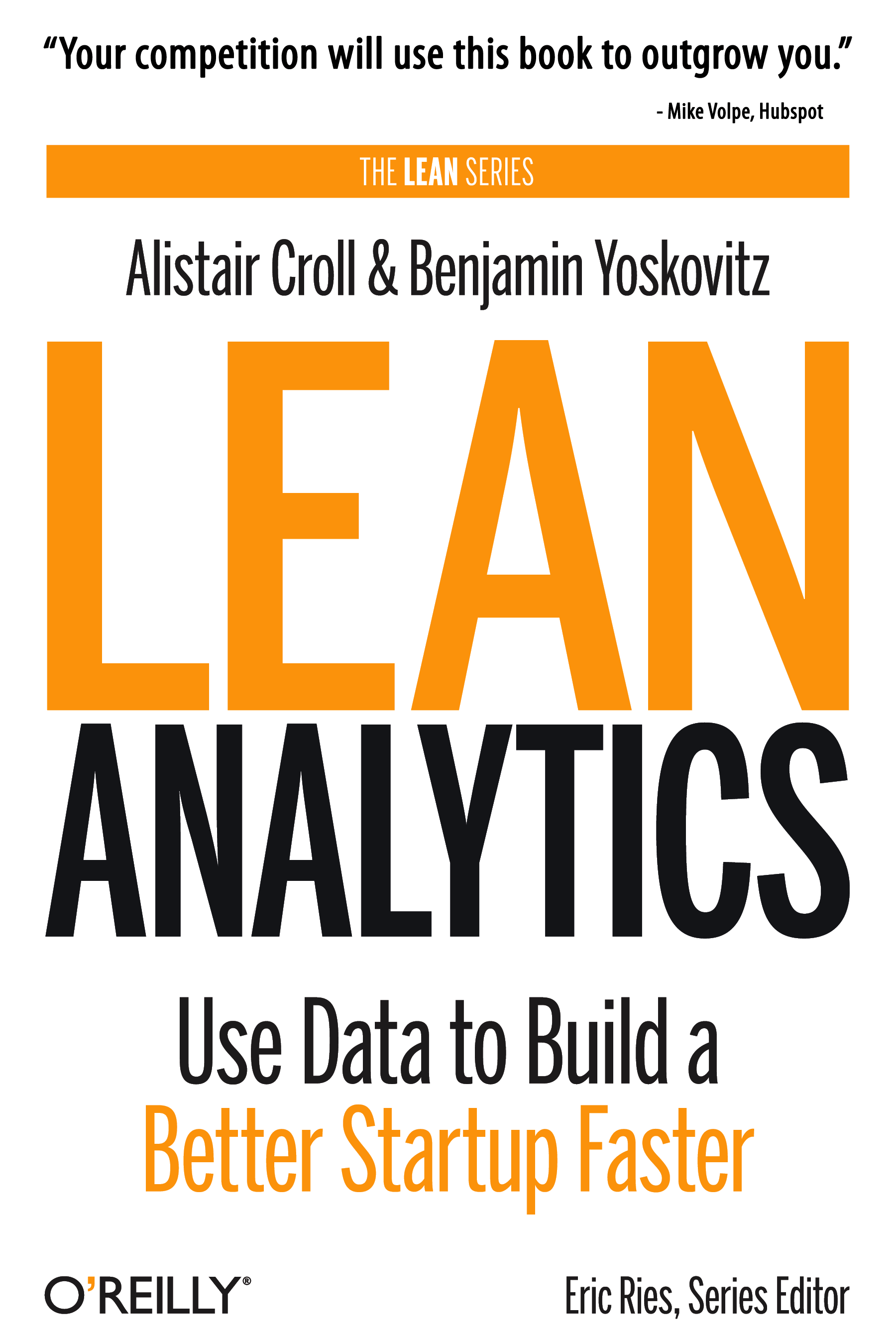
Get the Lean Analytics Book!
Advertisement
Startup Resources
Find Stuff
My Photos