Almost three years ago I wrote a blog post titled Hello, 2017. That was the last blog post I wrote. Since then I’ve been completely heads down building Highline Beta. It’s been quite the journey.
Building a startup is basically an all-consuming experience, physically and mentally. The ups and downs are so intense, and so quick, and in such rapid succession, that you can very easily lose yourself in the process. There’s a reason that so few people start new companies–it’s an insane thing to do. I’ve never thought of starting a company as risky per se (as long as you don’t re-mortgage your home, take on vast amounts of credit card debt, or really get sick) but it is not for the lighthearted.
As I look back on 3.5 years of Highline Beta, it’s basically impossible to parse out everything. Without question there has been incredible learnings (many of which I hope to share someday). Lots of wins. Really big wins. And lots of mistakes. Any founder that tells you they’re not making mistakes, pretty much on a daily basis, has convinced themselves of their own lies.
(Some of) the Wins
In November 2019, we announced the first close of our fund. That was an incredible milestone. I’m now a VC. Who’d a thunk it. Granted, raising a fund was always part of the plan, but when that first close happens it’s still pretty unbelievable. Raising a fund is a very intense commitment. You’re now in it for 10+ years, which sounds like a long time but will probably feel like 10 minutes (and sometimes 100 years!), and you have to generate a return for your investors. You’re “playing” with a lot of other people’s money. I don’t take that responsibility lightly. Having once inadvertently offended one my angel investors (from when I was running Standout Jobs), and then investing personally in 17 startups (and seeing the good, bad and ugly), you take this sort of thing seriously.
We also spun out a company, Relay, in partnership with American Family. When I announced Highline Beta back in 2016, startup co-creation was a key part of our focus. The idea was (and is) to identify areas of growth with big companies, outside of their core business, and then look for opportunities to build startups in those areas. In 2020 we’re going to be spinning out more companies. We’re working on a few right now in areas that I’m super excited about.
We’ve launched several accelerator programs that are changing how big companies and startups work together. “Accelerators” means so many things to different people, and in some arenas the word is even tainted. But we’re building a model around commercialization that I know works (because I’ve seen it.) An example of that is 100+ Sustainability Accelerator with AB InBev. In just two cohorts (the second one is being finalized now), we will have helped AB InBev work with 40 startups to launch pilots, globally, and help the environment. I won’t lie, it feels pretty good to build businesses and solve real problems at the same time. You genuinely feel like you’re making a difference. Personally, 100+ has been transformative for me because it’s a powerful reminder of what a big company can do when it puts its collective mind and energy towards something that makes good business sense, and helps our global community as well. I’ve loved learning about all kinds of sustainability issues and crazy solutions that will fix them, from supply chain transparency for African farmers that need financial identities, to carbon capture technology in craft breweries, to food and ingredient producers that take spent grain and turn it into something new.
We acquired Female Funders, a platform for supporting women angel investors. This is one commitment to gender diversity in a world that is sorely lacking in it. There are simply not enough diverse angel investors. The same holds true for diverse founders. A lot of energy is going into founder diversity, which we strongly believe in. We decided to put a significant amount of our effort into investor diversity. Simply put, diversity = winning. I’m not super involved in Female Funders day-to-day, but I love what it stands for and where it’s going. It’s taken time, but we’re on the cusp of scaling our efforts in this arena and it’s going to be amazing.
Highline Beta continues to iterate on its service/product offering and go-to-market. We’ve had some nice wins here, but lots of learnings too. And missteps. Our business isn’t a simple 1 product or 1 service thing–it’s somewhat nuanced, adaptable and fluid. Building a brand in an ever-crowding market where you have innovation consultants, venture studios, innovation labs, independent consultants, accelerators and more, is hard. What are we? Who are we? What do we do? When? Why? Dammit, figuring this stuff out ain’t easy. I’ve seen many startups struggle with this, and we’re no different. Many startups aren’t even truly sure what problem they’re solving–at their very core–and then it feels a bit like wandering the desert.
This Stuff is Hard
One of the things I try and keep top of mind as we face these types of challenges is the notion of outcomes over outputs. It’s not too difficult to do stuff, make stuff, or keep busy. Creating value is a whole other ballgame. I recently read Outcomes Over Output by Josh Seiden, which is a short read (few hours) but poignant. I shared the book with a couple of members on our team, and actually we should all read it (probably a few times.)
You Forget What You Knew
When you’re in the middle of building a startup it’s easy to forget everything you’ve learned about building startups.
For example, true scale takes 7-10 years. If you look at most of the really successful startups (or beyond-startup companies), they’ve been at it for a decade. Airbnb is a great example of that. Nothing is built in a day. And if the foundation isn’t solid–which btw, takes a long time to build because you’re going to screw it up a bunch of times–things will eventually crumble. So you build. Brick by brick. Then a couple bricks are crap, and you replace them. Or you put a few bricks in the wrong place, and you have to tear them out and restart. Over and over. There’s no secret formula. No silver bullet. Anyone who tells you there is, is a flat out liar.
Another example: You will spend more time doing things you don’t want to be doing than you realize. It almost doesn’t matter what you like and don’t like, just be prepared for the fact that a good portion of your time will be spent on things you don’t like, because those will be things your startup needs. Maybe it’s managing cash flow. Or recruiting. Or sales. Or operations. When I find myself in this situation, I try and focus on the big picture, the vision of what we’re trying to accomplish. I focus less on the work itself and more on what that work will help us achieve.
One more example: Pivoting is very, very real. And the hardest part of this job is decision making. What seemed like a good idea 6 months ago goes in completely the opposite direction now. In the early days (even 2-3+ years in) there are so many unknowns that you have to make a lot of decisions based on gut and instinct. There’s some data, but never enough. And you have to move fast. So you pick. And then when you realize you’re wrong, you pivot. New data comes in, circumstances change, etc. I don’t think there’s been a single startup in history that hasn’t pivoted (there probably is, but this is a moment for being dramatic.) Sometimes the best decision is no decision at all. Take a breath, pause and think. Strategy is sometimes a bit of a dirty word early on for startups, but in absence of one you’re just running and executing, but perhaps not building as solidly and smartly as you should. So change is real. It’s the one constant. And it’s spurred by external and internal factors, some of which you can control, many of which you can’t. I try and remind myself that the whole thing is a learning process. When you stop learning, you’re probably toast. Back to the basics. Build. Measure. Learn. It’s so hard to do, but when done right, it genuinely works.
The Future is Bright
When I started Highline Beta with Marcus Daniels and Lauren Robinson, I was pumped. It’s all ahead of you. All vision and chutzpah. You’re selling the dream. But in reality when you start a new company you don’t have a heck of a lot. Maybe you have a validated problem. You’ve got a small team. But you haven’t truly proven much.
Three+ years later and reality sets in. Things look a bit less shiny. You’re three years older. Gray hair starts to creep in. Shit happens. But in actual fact I’m more excited about Highline Beta now than I was 3 years ago. Day in day out, it doesn’t always feel like that (*laugh*) but we’re building an actual foundation. Piece by piece. The fund is there. We’ve spun out a company and we’re working on several others. We have a foundational, core team that is charging ahead to crystallize Highline Beta’s value proposition and prove our value to customers, every single day. The assets are falling into place, which you need if you have any chance of scaling.
We’ve worked on some awesome initiatives, with great clients and crazy smart, ambitious people. We’ve helped huge companies genuinely innovate and push the boundaries of what we all thought was possible, whether it was pursuing new markets, new business models, hiring, incentive models, etc. New innovation systems are being built within companies that we haven’t really seen before. Being a part of that is pretty cool.
Connecting Dots
I realize now, 3+ years into this that Highline Beta is in the business of connecting dots.
You actually never know when the right ingredients come together to make something special. It could be an idea within a large company. Or a person that wants to build something new. It could be the combination of a growing trend, a startup building tech in that space, and a corporate partner that wants to invest. I’ve been surprised many times with respect to where opportunities lie, and how you can connect dots for customers, users, startups, partners, etc. when you put yourself in the middle of many things.
We’ve been lucky at Highline Beta to work across many different industries. We have learned a lot. We’ve worked in insurance, health care, mobility, banking, home & proptech, CPG, and more. When you go into an industry as a newbie you get to ask all the dumb questions. Eventually the questions become smarter, and the opportunities start to emerge. You start to see patterns and your Spidey sense kicks in. Deals start happening and you’re off to the races.
I love learning about new industries. More specifically, I love understanding the problems in those industries at a very user/customer-centric level, because that’s when you can build something great.
And now things are coalescing. We’re seeing the same challenges over and over again inside large companies and we have answers. We can solve real problems. Patterns are emerging that give us the confidence and ability to deliver even more results for clients, startups, and our investors.
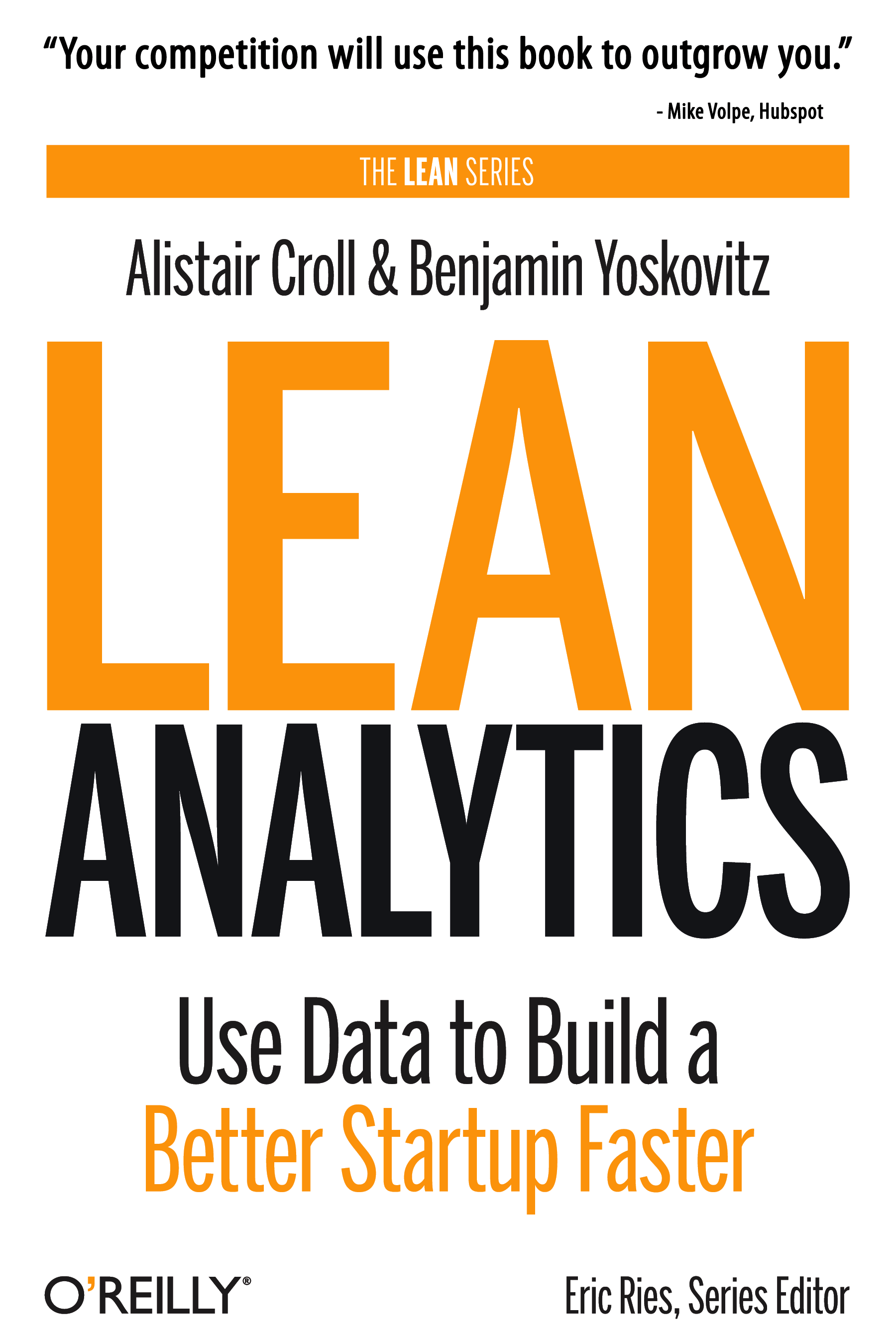
I also think there’s a book in here. It’s been 7 years since Lean Analytics was published. I wasn’t sure I would ever write another book, and maybe I won’t, but Alistair Croll and I have started talking about it. And I’ve got a separate book idea based on a lot of the stuff I’ve now seen that I think could truly help corporate innovators everywhere. We’ll see if 2020 is the year.
I truly love writing. My team groans every time they get an email from me, because they’re often small manifestos of crazy…I can only imagine what they think when they’re scrolling through. But long form content is important. At least to me. The idea of putting yourself out there, sharing your thoughts in a deep, meaningful and strategic way feels right. Sometimes you feel inspired, or just need to get some things off your chest. Having said that it might be another 3 years before I write another blog post, because I’ve got a lot of intense work ahead of me. We all do at Highline Beta, and I’m excited to take it on and win.
I want to thank everyone that’s helped Highline Beta get to this place. Our investors, partners, clients, friends, family, team and more. Happy Holidays and have a kick ass 2020.
 Founding Partner at