6 Things You Need to Pivot Successfully

Pivot. We’re all familiar with the word — and many people now roll their eyes when they hear it. The word has been bastardized, overused, and taken out of context. But it doesn’t mean pivots aren’t important. Dont hate the word, hate the people that use it incorrectly and ignore its importance.

Pivot. Say it with me. Pivot. Pivot. Pivot.

Recently, I did a presentation on pivoting: what it means, why it’s important, and how to do it properly. In preparing the presentation, I came up with a definition that speaks to the core of pivoting:

A pivot is a shift in one aspect of your startup’s focus based on validated learning.

(Others of course have defined pivots before this, but this is how I described it.)

I’ve included the presentation as a Slideshare deck. Below that, I’ve shared some additional details on the 6 things you need to pivot successfully.

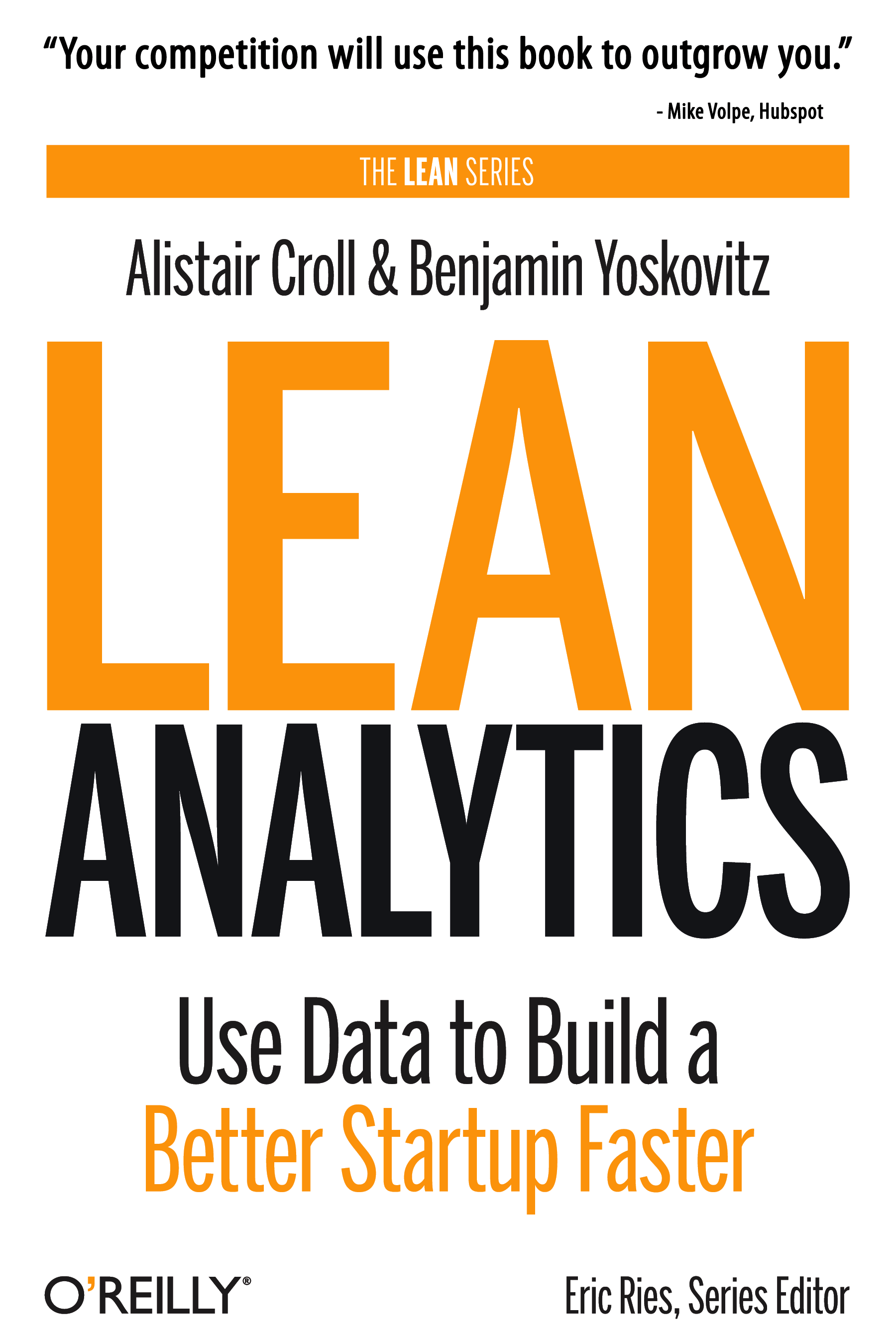
And yes, I hype the book, Lean Analytics — it’s coming out March 8th, and we’re hoping people will pre-order copies ASAP!

You can do so here: http://leananalyticsbook.com/buy-lean-analytics-book/

On to pivoting. So what do you need to at least try and pivot successfully?

  1. Big vision. Without a big vision — without knowing where you want to go and why you’re doing things — you simply can’t weave your way there. Without a big vision, you’re weaving (or pivoting!) aimlessly. Lean startup can help you achieve your big vision but it can’t create or define it for you.
  2. A deep understanding of the problem. Most entrepreneurs I speak with genuinely don’t understand the problem they’re trying to solve whether or not it’s worth solving. They haven’t dug into the problem enough. Or they’re trying to solve a universal truth. If you don’t understand the problems at their core, you can’t figure out how to pivot properly.
  3. Validated learning. A pivot without actual learning is basically a “lazy pivot”. You’re deciding — on a whim, with no real evidence — that you should go do something else. And usually that lack of learning means you pivot somewhere half-ass, ending up at about the same point in your startup’s progress as you were before (not very far!)
  4. Actual (falsifiable) hypotheses. Validated learning isn’t enough. You need falsifiable hypotheses that you can test against, otherwise it’s very difficult to know if your pivot is going well or not.
  5. Metrics and lines in the sand. A big part of Lean Analytics is our discussion of what to track and what to compare yourself against. You need to know your One Metric That Matters and ideally you’ve got a targetin mind. If you miss the target, you re-evaluate; if you hit that target, you have the confidence (and data) to move on to the next step.
  6. A passion for the pivot. Entrepreneurs live on passion. Without it, you’ll fail, it’s as simple as that. There’s nothing in Lean Startup or Lean Analytics that says you can automatically follow a process and win. You need passion and guts. So even if you have everything else ready to go for your pivot, if you don’t actually care about where you’re pivoting to, it won’t work.

I don’t have a problem with the word pivot. It means something important to me (and to many others) and shouldn’t be taken lightly. And when you see companies successfully pivot, the results are amazing. In the book we have a number of examples of companies that successfully pivoted.

  • Backupify started as a B2C company offering consumers cloud-based digital storage. The company realized it was paying $243 to acquire a customer that only paid $39/year. The economics didn’t make sense. Backupify pivoted to providing (essentially) the same service to businesses. The company is now growing successfully, and has a Customer Lifetime Value (CLV) that’s 5-6x its Customer Acquisition Cost (CAC). That’s a fantastic ratio! (Typically in a SaaS business you’ll want to aim for 3x.)
  • Parsely also started as a B2C company, providing a reading tool to consumers to help them find content they’d like. It had thousands of users, but not enough revenue. Parsely pivoted to a content suggestion tool for publishers, and then pivoted again to offer publishers analytics tools.
  • Circle of Moms was originally called Circle of Friends. By leveraging the Facebook platform back in 2008, it grew its user base to 10 million. Except engagement was terrible. Mike Greenfield (one of the founders) did some exploratory analysis on the company’s data and discovered that moms were incredibly engaged users (in stark contrast to most others.) The company pivoted to focus on moms, and a few years later exited to Sugar, Inc.

Pivots aren’t “get out of startup failure free cards”, far from it. They lead to more intensity, more decisions, more uncertainty, and more hard work. But if you’ve decided it’s not time to quit, but time to pivot then do it properly and go for it.


When is it Time to Pivot or Quit?

Entrepreneurs aren’t quitters. To succeed you need to be resilient, thick skinned and borderline crazy. You need to have just the right amount of delusion to believe you can succeed, spurring you on despite the absurd odds. But sometimes, you have to quit.

On the other hand, sometimes you need to pivot. Unfortunately, many entrepreneurs use the pivot as an excuse to remain delusional and shift their fleeting attention to something else, after the slightest setback. Alistair Croll calls this the “lazy pivot.” Truth be told, most of these “lazy pivots” aren’t really pivots, they’re “do-overs.” Pivots and do-overs work, but not when they’re done with a minimal amount of effort and rigor.

So, when should you pivot or quit?

It’s a hard question to answer, and for each individual it’s going to be a bit different. There are examples of entrepreneurs sticking things out through really dark days and coming out years later with an “overnight success.” Other entrepreneurs pivot or change businesses entirely and win. There are no absolutes. But speaking with an entrepreneur yesterday about this very topic, here’s what I suggested:

1. Be pragmatic and intellectually honest with yourself.

The best way to poke a hole in your reality distortion field is to use practical, straightforward tools to evaluate your progress. Take the Lean Canvas as an example. If you look at your Lean Canvas, can you honestly say you’ve got enough of the answers to keep going? Do you really understand the problem you’re trying to solve? Do you really know if the solution is right? Do you understand the channels to market? Do you have an unfair advantage?

Answer those questions with as much truth as you can muster and the patch is clearer.

Metrics can help as well. Here’s a rough draft of the Lean Analytics Cycle that Alistair and I are including in our book, Lean Analytics:

Lean Analytics cycle

It provides a basic framework for focusing on what’s important, testing things, and then measuring results.

To pivot, you need to have learned something through your previous efforts that gives you clues as to where you should focus. You can’t pivot without some form of validated learning and new assumptions. If you don’t have new insight that gives you even a hint of a direction, you need to really question whether it’s worth continuing. Pivoting for the sake of pivoting isn’t the answer (although you can get lucky…)

Before you pivot, you still need to look at the emotional side of things.

2. Do you care anymore?

Let’s say you’ve found something interesting that you think you can pivot to from your current business. Before doing so, you have to ask yourself whether you’re passionate about the new idea/problem/market/etc. If you’re not, it’ll be tough to succeed, even if you have proof that pivoting is the right move.

I’ve met quite a few people (it’s happened to me too) that get so lost in what they’re doing, and they invest so much into it, that they actually forget why they got into the business in the first place. So as you investigate the potential of a pivot, you have to ask yourself, “Why am I even going to do this? Will I be passionate about this new thing?”

If the answer is yes, you pivot. If the answer is no, you stop.

Maybe you take a step back to reevaluate, give yourself some time to breathe and think … or maybe, it’s time to quit, admit defeat, lick your wounds and come back another day to fight the fight once more.

Pragmatism + Passion (or Lean + Guts)

Lean Startup provides the framework for helping you make honest, pragmatic decisions about your progress and what to do next. You know if you’re not making fast enough progress. You don’t need someone else to tell you that. And you know if you’ve gained any insights worth exploring further or if you’re at a dead end. The pivot is either there and fairly obvious or it’s not. If you get into fabricating pivots wildly, you need to rethink your strategy.

At the same time, entrepreneurs don’t do anything without their guts. We need our guts, our instincts and our delusions to drive us off cliffs without any parachutes. Guts matter; you’ve just got to test them. Instincts are experiments. Data is proof.

If you get to the point where you don’t know what to experiment on anymore, and you’ve lost your purpose (in terms of why you started the business in the first place), you need to seriously look at shutting it down. If you don’t know what to do anymore, pragmatically, but you’ve still got a fire in your belly for what you set out to do, take a break and look for a restart. Don’t hang on, experimenting for the sake of experimenting, pivoting for the sake of pivoting. Pivot when you know what you’re pivoting to, quit if you don’t.

As a quick aside, the book that Alistair and I are writing about Lean + analytics is almost finished! I’m excited (and nervous!) about getting it into people’s hands. Publication date is April 2013. In the meantime, you can pre-order it here: Lean Analytics: Use Data to Build a Better Startup Faster


The Difference Between Stealth Mode and Quiet Mode

A lot of companies still talk about being in stealth mode and aiming for a big hoorah type launch. It doesn’t usually work. Worse still, startups that are in stealth mode rarely talk to customers, prospects, users, partners or anyone else before their big reveal, which means they have little to no validation for what they’re doing. They haven’t given themselves the opportunity to learn anything while they’ve spent months building their “revolutionary” product.

Stealth mode stinks.

You need to find a way of getting to customers, talking to the right people, and validating (or more likely invalidating) what you’re doing. If you go into a dark cave, spend months building something, and then launch, there’s a very good chance no one will care. And that’s incredibly painful.

Quiet mode is different.

I’m working with a couple startups right now that are in quiet mode. They’re actively talking to customers–daily in fact–and collecting tons of feedback. They’re iterating quickly and learning … all in plain sight. But no one, except for their users, cares. No one, except for their users, notices. And that’s perfectly fine. That’s the right way to “launch” without being in stealth mode.

You don’t need to get on a rooftop and shout your name out loud. You don’t need press. You don’t need community buzz. Unfortunately this is what so many early stage companies go after, and worse they use the buzz as validation that they’re onto something and prematurely attempt to scale without any supportive data or proof that they should. Or they go in the complete opposite direction into stealth mode and speak to absolutely no one, including customers and users, which is a recipe for painful, gut-wrenching failure.

I like quiet mode. Go directly to your customers, as often as you possibly can. Build tight, fast feedback cycles. Learn, learn and learn some more. Adjust your plans and get the traction and proof you need before “launching” officially to the rest of the world. By the time the rest of the world takes notice (and you want them to) you’re cruising. That’s quiet mode. Strategic, lean and focused.

One caveat to this is for recruiting. I’ve argued before that you need to make a lot of noise and build a recruiting magnet if you want to attract people. The press and community buzz can help with this, but very early on, it’s probably not worth the effort. Network, build relationships, and speak with people about what you’re doing in one-on-one sessions. But stay focused. Don’t get into the hype machine for the sake of recruiting and then get caught up in it for everything else. Quiet mode means being strategic about how you recruit. In stealth mode, when you choose not to speak to anyone whatsoever, you have no chance (unless you’re already extremely well connected.)


Ben Yoskovitz
I'm VP Product at GoInstant.

I'm also a Founding Partner at Year One Labs, an early stage accelerator in Montreal. Previously I founded Standout Jobs (and sold it).

My bio »

or

Follow me on Twitter

Get updates and special content
When I publish new content, get it directly in your inbox. Subscribers will get special stuff as well not available on the blog (but I promise it will be infrequent + high quality.)
or

Subscribe via RSS Feed

Get the Lean Analytics Book!
Advertisement
Startup Resources
Find Stuff
My Photos